Seville's return to the Red de Juderías de España – Caminos de Sefarad opened, in early 2026, a new stage for making the city's Jewish heritage known. We wrote about it when it was announced. Nine months on, the first tours held in the city under that framework can now be told.
International journalists, a broadcaster from the diaspora and a group of young Jews have walked the old aljama of Seville in recent months. Three different audiences, three ways of telling the same story.
A press trip with international journalists
The first was a tour for international journalists, part of the Caminos de Sefarad press trip organised by the Spanish Tourism Office in Rome together with the Red de Juderías from 22 to 26 June 2026, with stops in Segovia, Córdoba, Lucena and Seville.
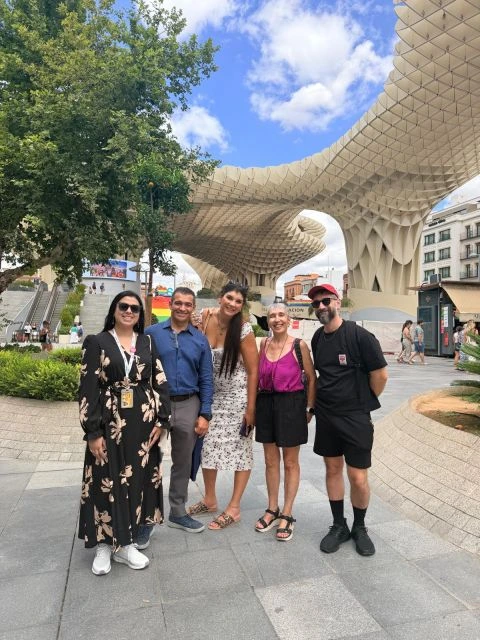
The Seville leg was guided by Alba, an official guide with Altai Turismo and the person behind the Casa Sefardí de Sevilla project. The route covered the main sites of the old Jewish quarter and went on to the Alcázar, the Cathedral and the Setas.
Visits like this serve a very specific purpose: to place the Sephardic history of Seville inside the international story of the city, which is almost always told without it.
Mercedes Hayón Cohen: Seville and the Sephardic diaspora
Another of the visits was that of Mercedes Hayón Cohen, who works on making Sephardic culture known and on the ties between Spain and Jewish communities abroad. Before the tour she took part in an official visit to Seville City Hall.
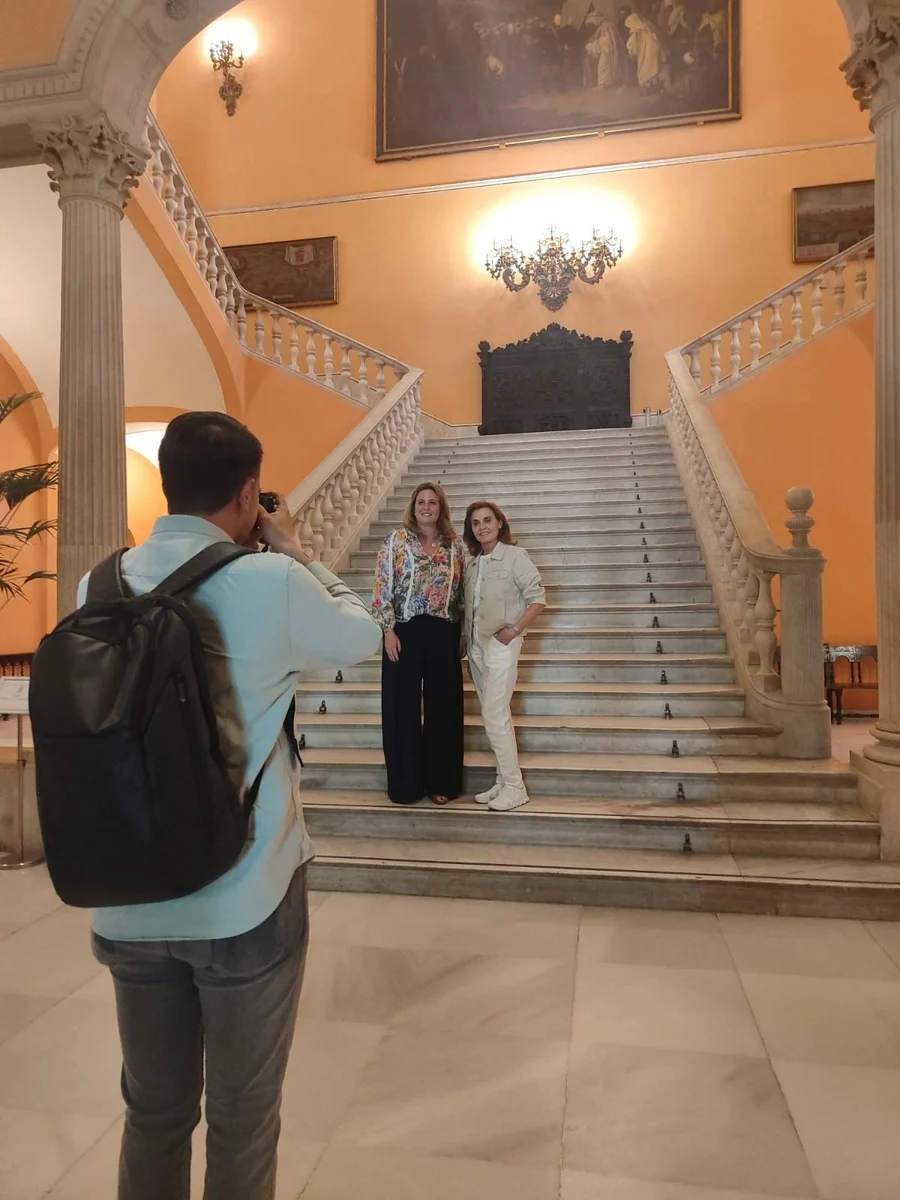
Afterwards, Alba walked with her through the old Jewish quarter and the Alcázar. The conversation drifted on its own towards what lies underneath all of this: the tie that many Sephardic families still keep with the places of Sepharad, centuries after leaving them.
Young Jews walk the old Jewish quarter
The third tour was with the Federation of Jewish Youth of Spain, guided by Alba, Samuel and Carmen.
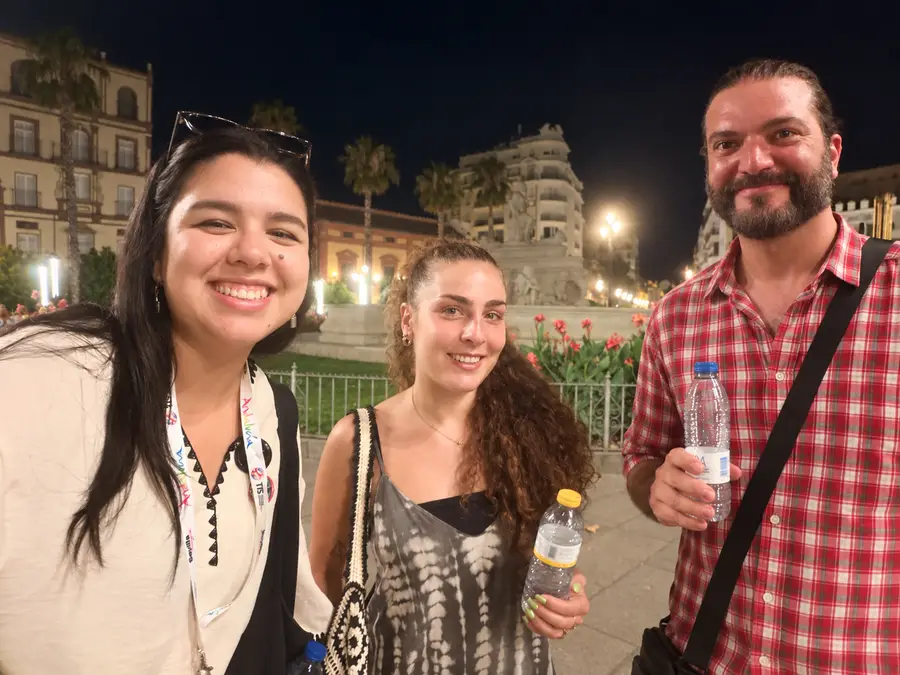
The group walked the streets of the old Jewish quarter: how the medieval community was organised, where the synagogues stood, and the changes the neighbourhood went through from the fourteenth century onwards. For many of those taking part these places are not only heritage; they are a family connection to Sepharad.
Telling Jewish Seville accurately
The challenge of telling this history is always the same: separating what is documented from tradition and legend. The look of Santa Cruz today invites you to believe you are walking through an intact medieval quarter, when much of its layout is far later. What actually remains of the Jewish quarter.
That is why the tours do not stop at pointing out places. They explain how the aljama took shape after the conquest of 1248, what the sources say, and what has been transformed over time: the three synagogues, the assault of 1391, the conversions and the later history of the conversos.
A stage that is only beginning
At Casa Sefardí we gather and publish online what is known of the city's Jewish history: heritage, people, documents, archaeology and Sephardic memory. The tours led by the guides of Altai Turismo do the other half of the work.
The website lets the information be studied and kept. The visits return it to the streets where it happened.
These first tours have brought that heritage to very different audiences, with a single aim: that the Jewish history of Seville take back the place it deserves in the story of the city.