The project · Casa Sefardí de Sevilla
A museum that, for now, lives online
Casa Sefardí de Sevilla is a virtual museum: not a cabinet of objects, but a place in which to understand. Six thematic rooms run through the history of the city's Jewish community — from its Roman origins to the present day — with reproductions, documents and interactive media: the Judería born after the conquest of 1248, in what is today the Barrio de Santa Cruz and San Bartolomé; its three synagogues turned into churches; the pogrom of 1391; the expulsion of 1492; and the Ladino the Sephardim carried away with them. Every piece comes with its archive behind it.
Nothing on the wall without a document behind it.
The project
A museum that, for now, lives online
Casa Sefardí de Sevilla is a virtual museum: not a cabinet of objects, but a place in which to understand. Six thematic rooms run through the history of the city's Jewish community — from its Roman origins to the present day — with reproductions, documents and interactive media: the Judería born after the conquest of 1248, in what is today the Barrio de Santa Cruz and San Bartolomé; its three synagogues turned into churches; the pogrom of 1391; the expulsion of 1492; and the Ladino the Sephardim carried away with them. Every piece comes with its archive behind it.
It should be said plainly: on the ground there is nothing to visit yet. The city's tourism office has shown interest in the project, but a difficult international context has kept postponing the decision. What does exist is the full museological plan, with its rooms, its pieces and a budget of its own, over and above what the public institutions would take on.
In the meantime the museum has been built here: the six rooms are walked online, from anywhere, at any hour and with no ticket. Alongside them run the tours through the quarter, which already work. Behind it all stood one declared aim: that Seville, which had one of the largest Jewish quarters in Spain, should return to the Network of Jewish Quarters, which it left in 2016 — and in January 2026 it did.
The reason
Why Seville
Seville had one of the largest Jewish quarters in Spain, and today you would hardly guess it. The quarter covered what are now Santa Cruz and San Bartolomé, enclosed within the city wall after the share-out of 1248; Alfonso X handed the aljama three mosques to turn into synagogues, and not one of the three is a synagogue any more.
Almost no medieval architecture of the quarter is left standing: the streets are still there under other names, but the neighbourhood as such vanished between the pogrom of 1391 and the expulsion of 1492. It is a history to be read more than visited — which is exactly why it needs telling.
What is still there, untouched, lies underground: the Jewish necropolis surfaced during the works for the underground car park on Cano y Cueto street, outside the wall, and much of it was never excavated. That this museum begins online is, among other things, a way of keeping the memory from depending on a door being opened.
The method
Nothing on the wall without a document behind it
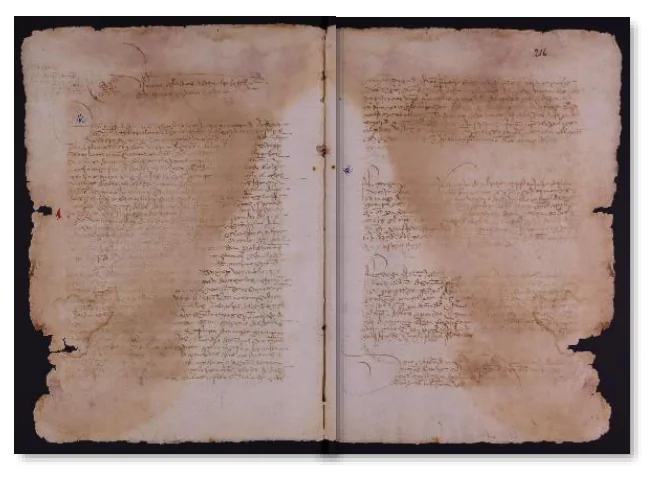
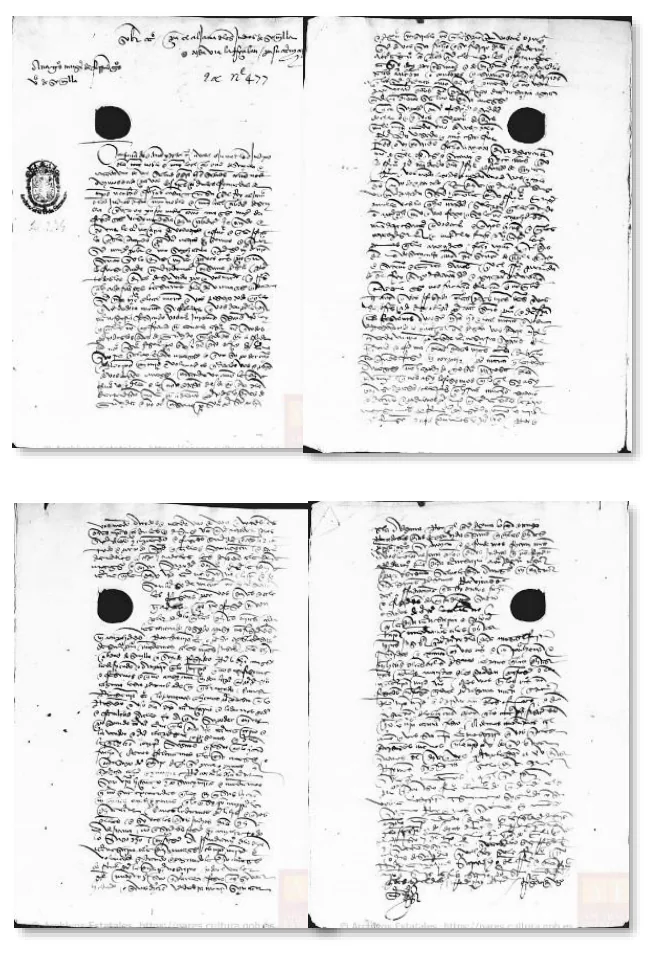
The content comes from archives and material remains: the contracts of Doña Leal in the Provincial Historical Archive of Seville, the decrees of the Catholic Monarchs concerning Ana Gonçales in the General Archive of Simancas, the Hebrew epitaph of Ferdinand III in the cathedral, the tombstones and the archaeological finds of the city.
Two decisions taken from the start: to consult the Jewish community before settling the themes, and to test the content — with members of the community, teachers and institutions. An account of a community is not written without it.
Who we are
A university study and a route already walking
Casa Sefardí began as a Master's dissertation in the Master's programme in Art, Museums and Historical Heritage Management at the Pablo de Olavide University of Seville (2023/2024), written by Alba Aurora Delgado Ramírez under the direction of Dr Inmaculada Concepción Carrasco Gómez. From there come the more than one hundred and fifty pages of research that hold up every room.
It has not been written alone. The project rests on an interview with the archaeologist Fernando Amores, professor of Archaeology at the University of Seville, and on a conversation held in April 2024 with a member of Seville's orthodox Jewish community who preferred not to be named: his objections changed the choice of themes. The city's tourism office and the Network of Jewish Quarters have also been approached.
The museum lives online; the route walks the streets. The Jewish History of Seville route has run since February 2022 with Altai Turismo, the guiding platform of the same author, and its bookings show the demand that sustains the project: those linked to Jewish history rose from around 15% of the total in 2022 to 25% in 2023 and 34% in the first half of 2024. The museum is conceived as the complement of that route: it explains online what the street no longer keeps.
The team
Where there is no museum, the guide is the museum
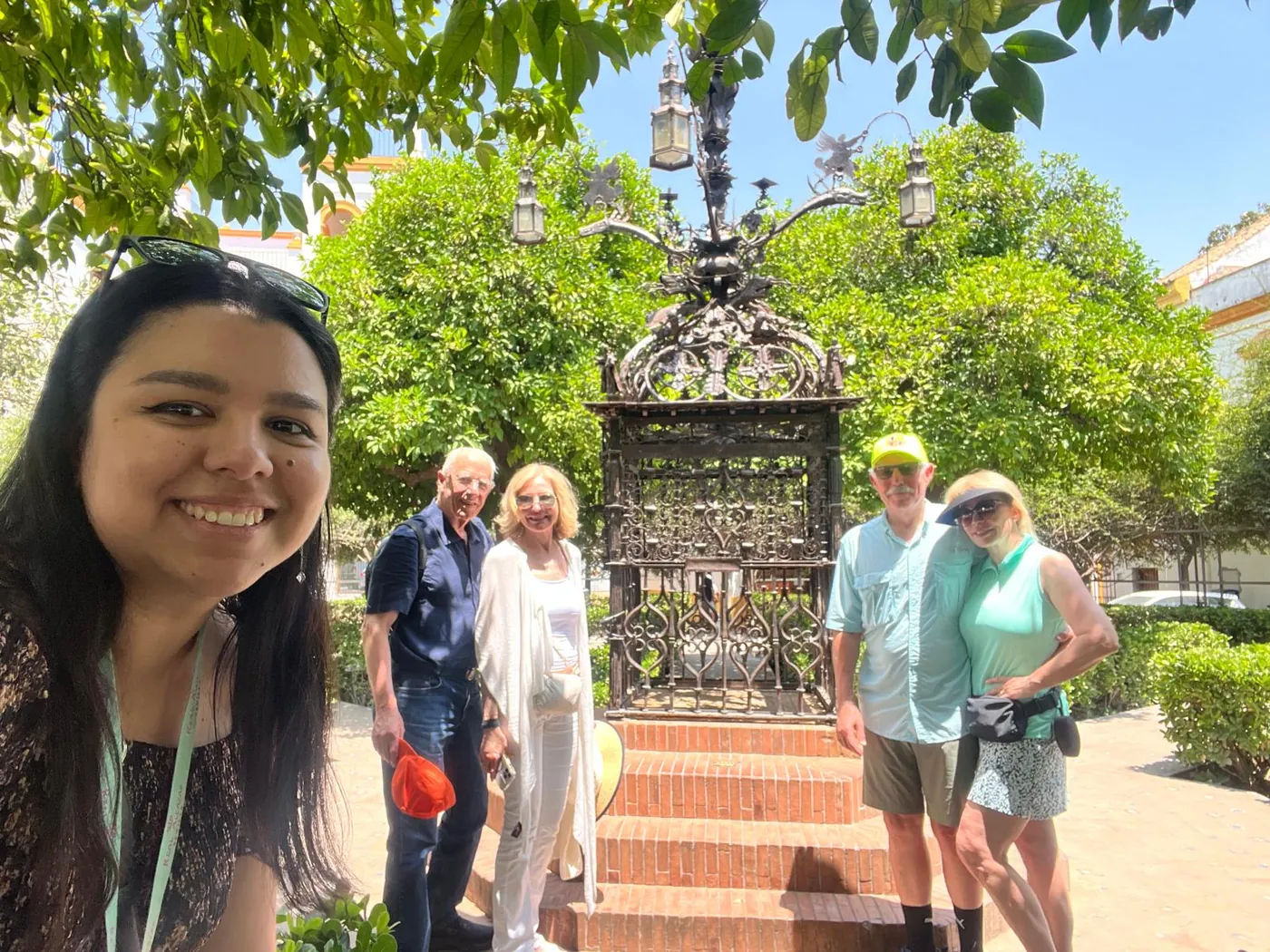
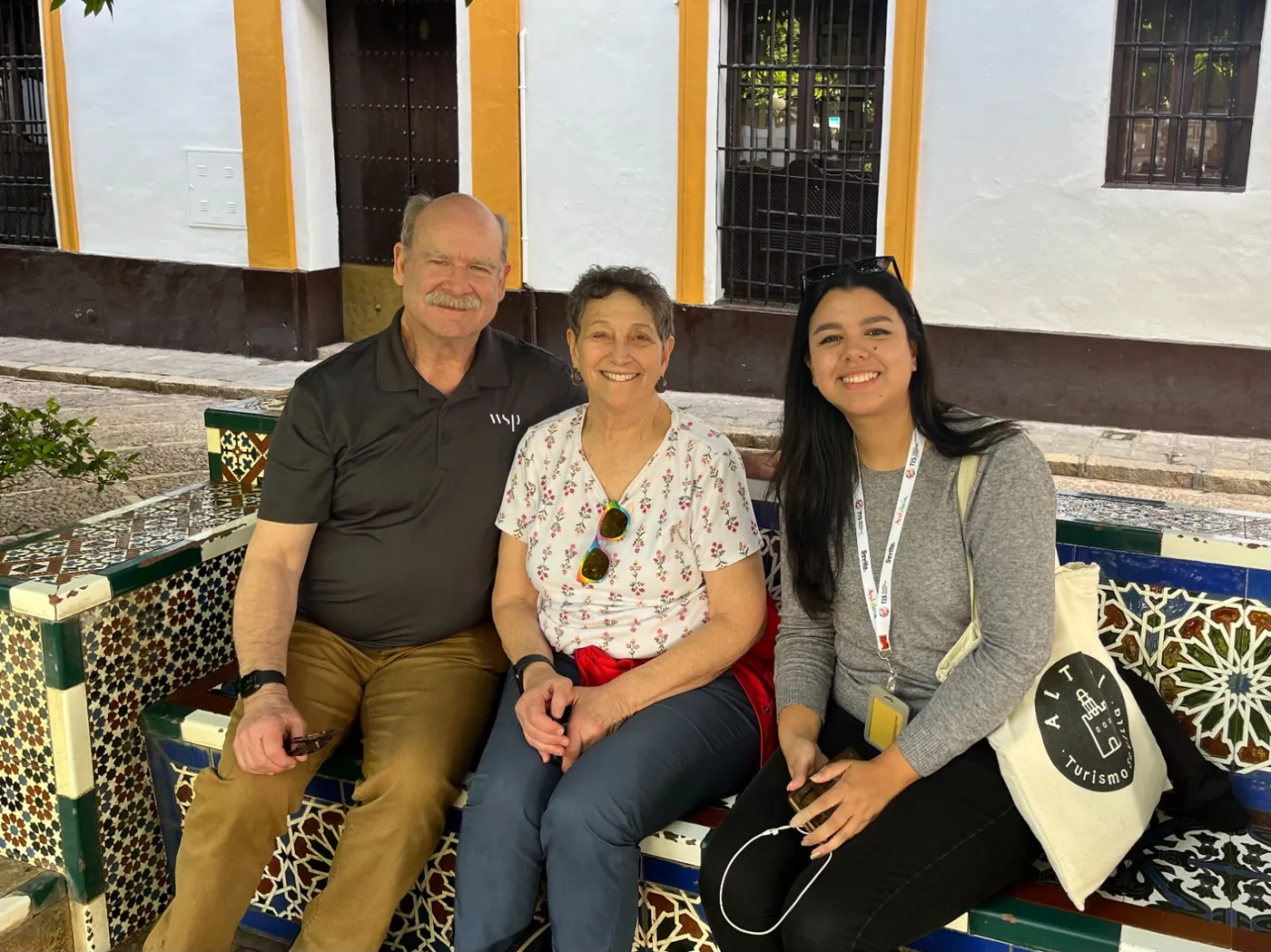
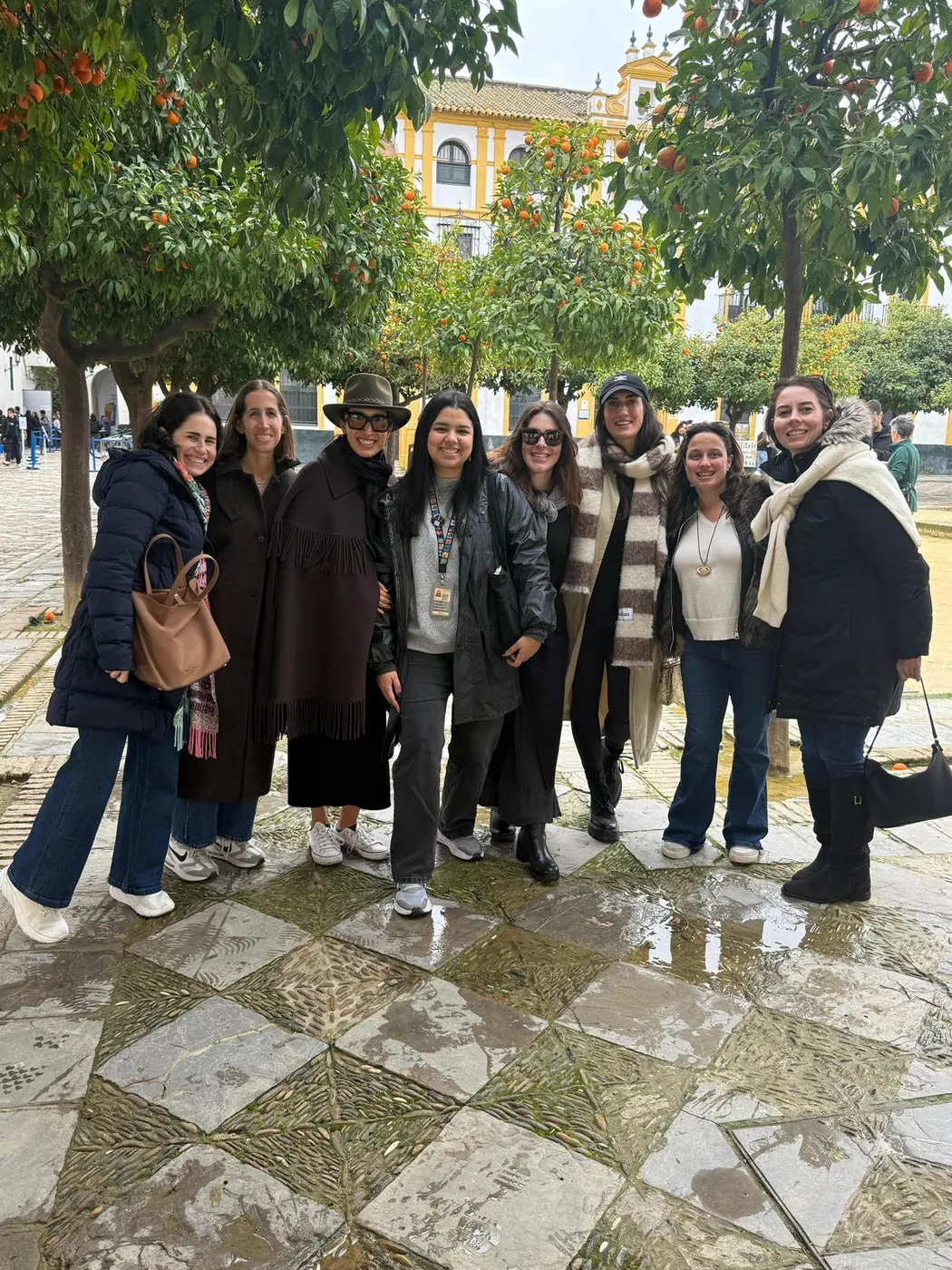
Behind the tours stands the team of Altai Turismo, the platform of official guides run by the author of this project. The specialisation in the Jewish quarter is not a label: the Jewish History of Seville route and this museum rest on the same research — more than one hundred and fifty pages of information — and what is told in the street comes from documents that can be cited: the contracts of Doña Leal, the Simancas decrees concerning Ana Gonçales, the Hebrew epitaph of Ferdinand III in the cathedral.
That preparation matters because Seville's Jewish quarter — one of the largest in Spain — keeps almost no stones that speak for themselves: a synagogue turned church, a necropolis beneath the gardens, streets that changed their names. That is why the tours are led by certified official guides, trained on the project's research, and why the route does not stop at Santa Cruz: it reaches the places other routes leave out.
Alba
Coordinator and official guide
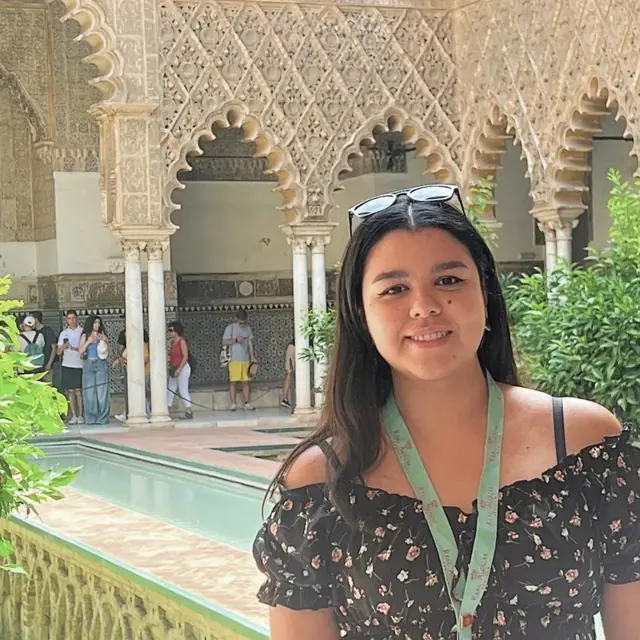
Creator of Casa Sefardí, born as her Master's thesis. She coordinates the team and is specialised in Heritage Interpretation: archival rigour told with warmth, far from the monotonous routes.
Spanish · English
Beatriz
Official tourism guide
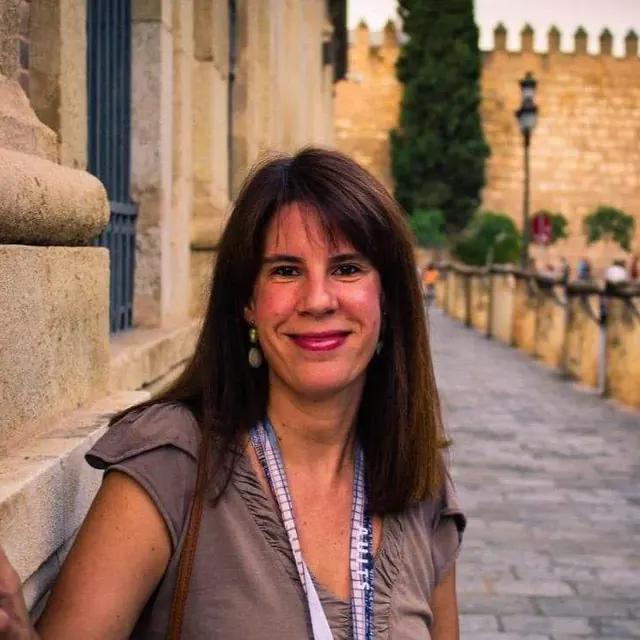
Guiding has been her calling since childhood and led her to study Tourism: she shares the history and essence of Seville, her city, with travellers from all over the world.
Spanish · English
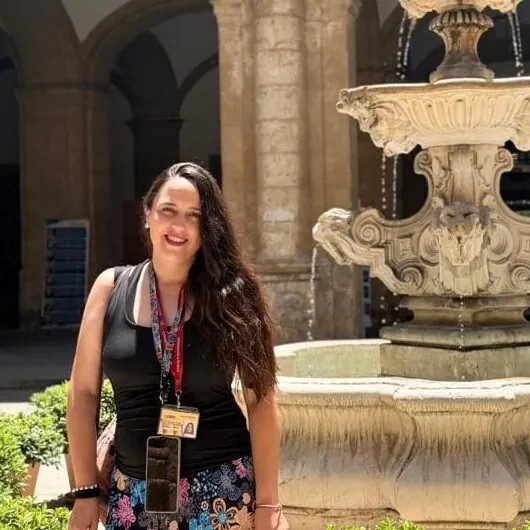
Laura
Official tourism guide
Teacher, writer and historian in the city's archives: her routes tell unpublished details found in the original documents she studies for her doctoral thesis — and in others she comes across along the way.
Spanish · English
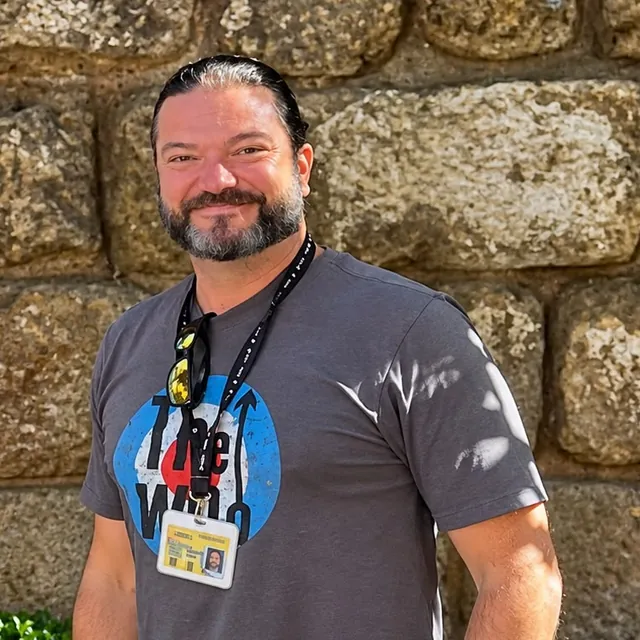
Samuel
Official tourism guide
A guide from a very young age, trained in Tourism: tapas, flamenco, monuments and traditions, told with the enthusiasm of someone who lives them daily.
Spanish · English
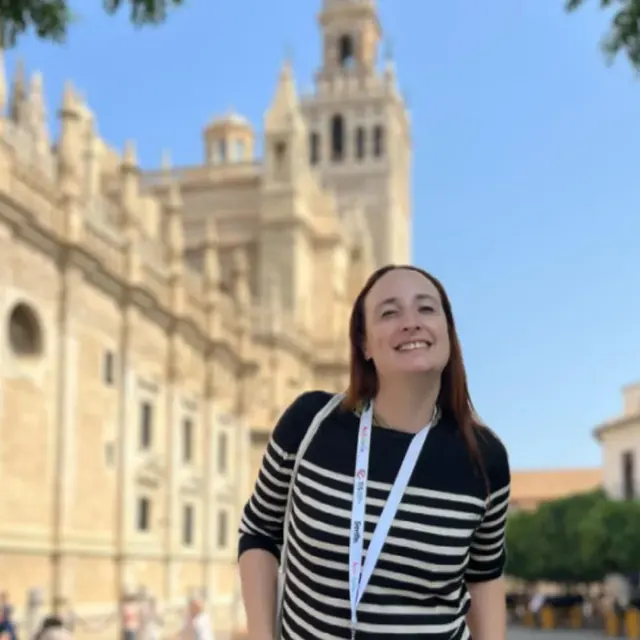
Mila
Official tourism guide
A specialist in gastronomic tours and Sephardic gastronomy: Andalusian architecture, traditions and flavours to discover Seville through its cooking. She earned her guide licence in Toledo, where she deepened her knowledge of Jewish history.
Spanish · English
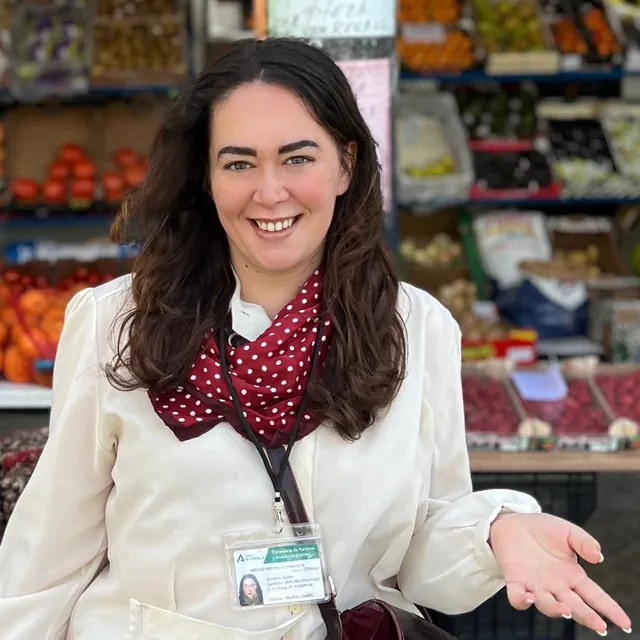
Clara
Official tourism guide
She trained in History, Anthropology and Cultural Studies. She is passionate about social history, Sephardic gastronomy, markets and urban planning: on her walks, every street or square reveals the people who shaped it.
Spanish · Italian · English
Contact
How to take part
What can already be done is to enter the collection — it is always open — and to walk: the tours through the Jewish quarter set out from Santa Cruz all year round, in Spanish and English, and are booked through Altai Turismo.
Three voices matter most: that of the Jewish community of Seville, without whose participation this centre would have no reason to exist; that of the families, archives and researchers who keep documents, photographs or testimonies of the quarter; and that of the teachers who would like to bring their pupils. If you find an error in these pages, write to us through Altai Turismo: it will be corrected, and the correction recorded.
One last thing, said plainly: this is a project of history and education, not a political one. It deals with two thousand years of Jewish presence in the Iberian peninsula and with how they were lived in one particular city: coexistence, expulsion and return. It means to be a place of study and respect for anyone who enters.
Set in Seville · MMXXVI