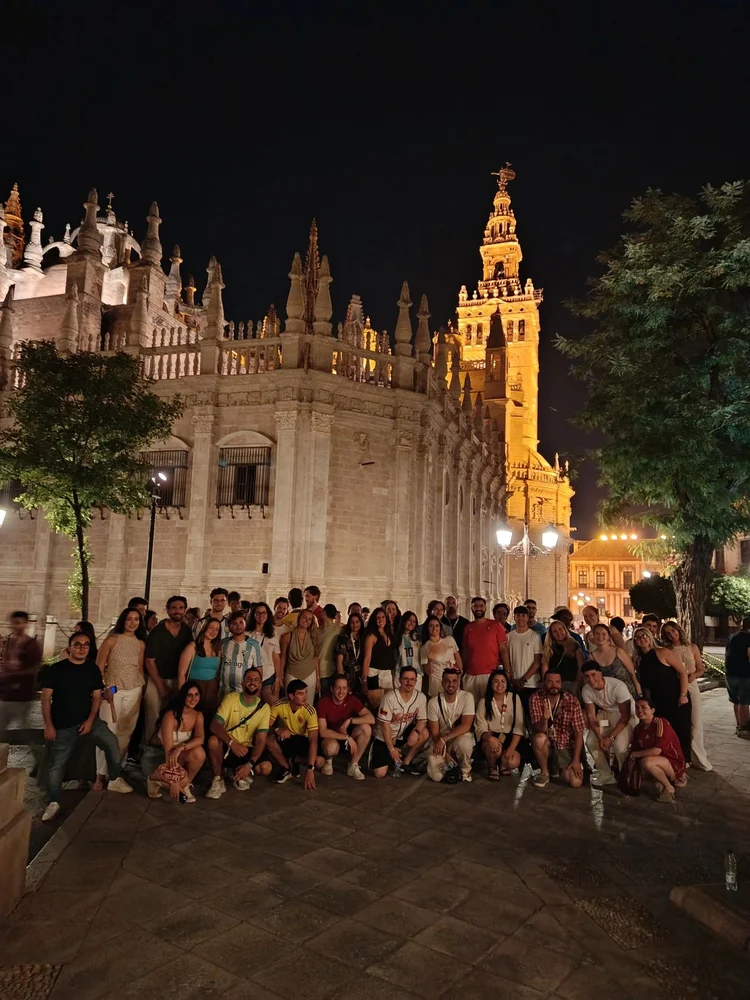
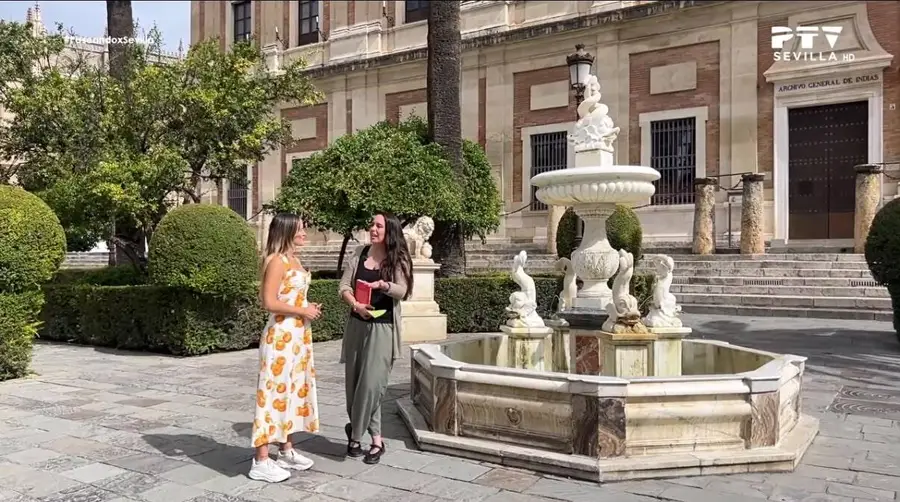
The episode runs about fifty minutes, in Spanish, and is the sixth of the fourth season of “Paseando x Sevilla”. If you would rather watch it full size, it is on PTV Sevilla's YouTube channel. Below we sum up what the two guides told and where to read more about each story.
What is “Paseando x Sevilla” on PTV Sevilla?
“Paseando x Sevilla”, read as “Paseando por Sevilla” (Walking through Seville), is a programme on the local television channel PTV Sevilla that devotes each episode to a walk through the city: a street, a convent, a neighbourhood. The one of 16 October 2026 was called “Mujeres de Sevilla”, and in it the presenter walked the city with two guides from Altai Turismo.
The guides were Laura and Alba, from the team of official guides at Altai Turismo. Alba is the creator of Casa Sefardí de Sevilla. Laura is a historian who researches, in the city's archives, the lives of women from the fifteenth to the seventeenth century.
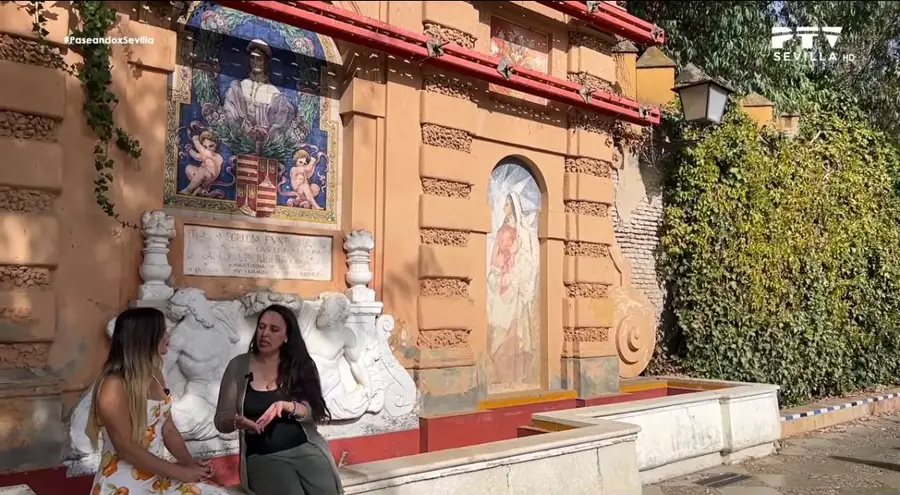
Who were Doña Leal and Ana González, Jewish women of medieval Seville?
Doña Leal and Ana González were two Jewish women of fifteenth-century Seville whom we know through their documents: an eye doctor and a butcher. They are the two women who open Room III of the Collection, “Historical figures”, and they were the women Alba spoke about on the programme.
Doña Leal was a “maestra de sanar ojos”, a mistress of the healing of eyes. Three notarial contracts of 1474, kept in the Provincial Historical Archive of Seville, show her agreeing to treat the daughter of a Muslim, the daughter of a sailor from Sanlúcar de Barrameda and the daughter of a Christian or converso widow, although Castilian law barred Jews from being physicians to Christians. We tell the full story in “Doña Leal, Eye Doctor”.
Ana González, Ana Gonçales in the documents, ran a butcher's shop in Seville in 1477. When members of the community tried to take her business, she produced as evidence a letter from the Catholic Monarchs authorising her to run it, and the monarchs themselves received her in audience and confirmed that the document was genuine. Their decrees on her case are kept in the General Archive of Simancas.
- Doña Leal. Who she was: a Jewish eye doctor, “maestra de sanar ojos”, living in the parish of San Isidoro. When: 1474. Documents: three notarial contracts in the Provincial Historical Archive of Seville. Where to see her: in Room III of the Collection and in the article devoted to her.
- Ana González (Ana Gonçales). Who she was: a Jewish woman who ran a butcher's shop in Seville. When: 1477. Documents: decrees of the Catholic Monarchs in the General Archive of Simancas. Where to see her: in Room III of the Collection.
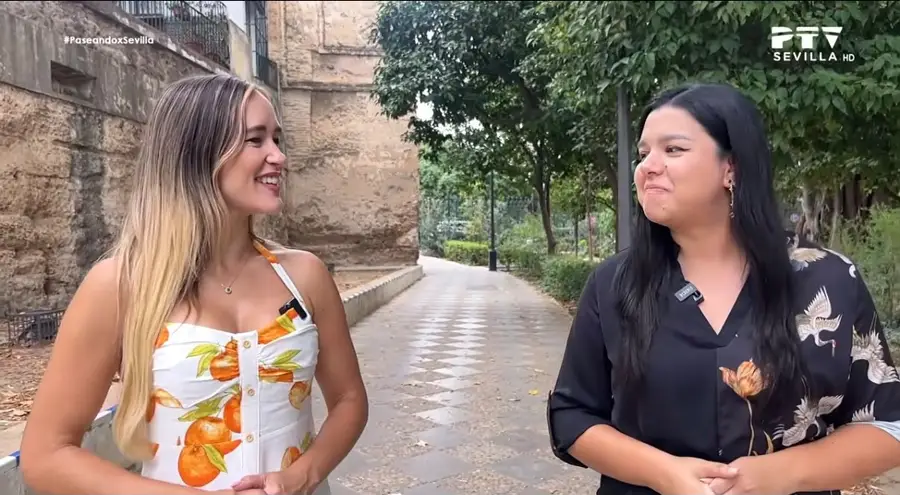
What is Casa Sefardí, the virtual Jewish museum Alba presented?
Casa Sefardí de Sevilla is a free virtual museum of the city's Jewish history: six thematic rooms you walk through online, from anywhere, at any hour and with no ticket. It began as Alba's Master's dissertation in the Master's programme in Art, Museums and Historical Heritage Management at the Pablo de Olavide University (2023/2024).
That is the project Alba presented on PTV: a museum that gathers what is known of Jewish Seville, from its Roman origins to the present day, built on documents that can be cited, such as Doña Leal's contracts or the decrees concerning Ana Gonçales. On the ground there is nothing to visit yet; the museum lives online, and the Jewish quarter is walked with the tours.
You can enter the free virtual museum right now, or check availability to walk Seville's Jewish quarter with an official guide. If you have questions or are travelling as a group, write to us.
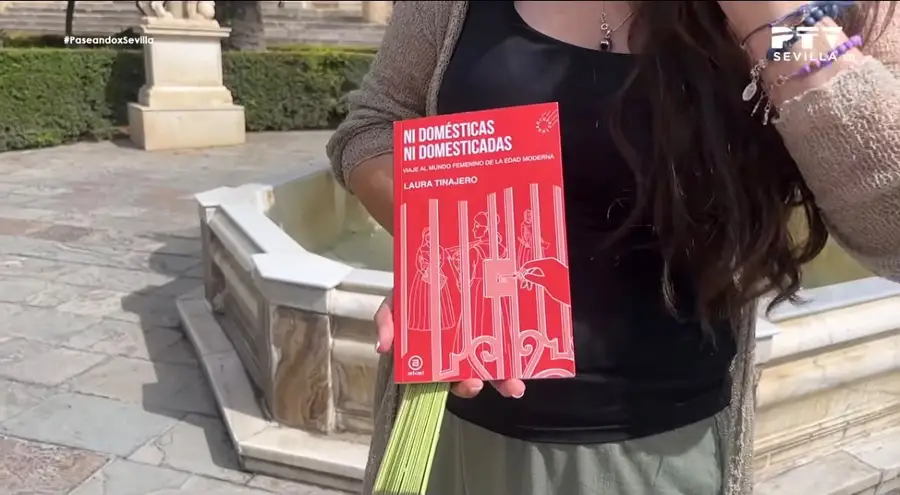
What is Laura Tinajero's book “Ni domésticas ni domesticadas” about?
“Ni domésticas ni domesticadas. Viaje al mundo femenino de la Edad Moderna” (Neither Domestic nor Domesticated: A Journey into the World of Women in the Early Modern Age) is the book in which Laura Tinajero tells the lives of women she found in six years of research in Seville's archives. It was published by Ediciones Akal in July 2026, in its Artefactos series: 208 pages, in Spanish, ISBN 978-84-460-5896-0.
As she told EFE, she began in the Provincial Historical Archive of Seville and went on to the Archivo de Indias and the Archbishopric's archive. They are women of the fifteenth to seventeenth centuries whom historians left out, and among them are women who also appear in Alba's research for Casa Sefardí.
One of the cases Laura highlighted in that interview is María Sánchez, administrator and co-founder of the University of Seville in the early sixteenth century. She was highly respected in her day, but after the death of the founder, Maese Rodrigo, the first rector removed her from the story of the foundation, and later historians repeated the omission.
Laura Tinajero (Seville, 1982) holds a degree in Humanities from the Pablo de Olavide University, is a PhD candidate at the University of Córdoba, an official tourist guide in Seville and the author of four novels. Her profile is on her author page at Akal.
How can you walk the Seville of these women with a guide?
The most direct way is to walk it. Altai Turismo's Jewish history tours cover the old Jewish quarter of Seville privately, in two hours, with official guides, in English or Spanish: book a private Jewish Seville tour. Altai Turismo also runs a walk devoted to the women of Seville, described in its write-up of the PTV programme.
Frequently asked questions
When did PTV Sevilla air its programme on the women of Seville?
The episode “Mujeres de Sevilla” of “Paseando x Sevilla” aired on PTV Sevilla on 16 October 2026 and is published on the channel's YouTube page. It is the sixth episode of the fourth season, runs about fifty minutes in Spanish, and features Laura and Alba, official guides at Altai Turismo.
Who is Laura Tinajero?
Laura Tinajero (Seville, 1982) holds a degree in Humanities from the Pablo de Olavide University, is a PhD candidate at the University of Córdoba, an official tourist guide in Seville and the author of four novels. She researches the lives of fifteenth- to seventeenth-century women in Seville's historical archives, and in 2026 Ediciones Akal published her book “Ni domésticas ni domesticadas. Viaje al mundo femenino de la Edad Moderna”.
Who publishes “Ni domésticas ni domesticadas” and how many pages does it have?
“Ni domésticas ni domesticadas. Viaje al mundo femenino de la Edad Moderna”, by Laura Tinajero, is published by Ediciones Akal in its Artefactos series. It came out on 23 July 2026, has 208 pages, is written in Spanish and its ISBN is 978-84-460-5896-0; it is sold on Akal's website and in bookshops.
What did Alba present on the PTV Sevilla programme?
Alba presented Casa Sefardí de Sevilla, the free virtual museum of the city's Jewish history that began as her Master's dissertation at the Pablo de Olavide University, and spoke about two of its women: Doña Leal, a Jewish eye doctor in 1474, and Ana González (Ana Gonçales), a Jewish butcher in 1477. Both open Room III, “Historical figures”.
Sources
- PTV Sevilla — “Paseando x Sevilla HD | Mujeres de Sevilla”, 16 October 2026 (YouTube)
- Ediciones Akal — Laura Tinajero, “Ni domésticas ni domesticadas. Viaje al mundo femenino de la Edad Moderna” (2026), book page
- Ediciones Akal — Laura Tinajero, author page
- EFE / Efeminista — Fermín Cabanillas, “'Ni domésticas ni domesticadas', historias de mujeres ocultas en cinco siglos de archivos” (stories of women hidden in five centuries of archives), 4 October 2026
- Delgado Ramírez, A. A. (2024). Casa Sefardí de Sevilla. Trabajo Fin de Máster, Universidad Pablo de Olavide, curso 2023/2024.
- Archivo Histórico Provincial de Sevilla, Oficio XV, leg. 9098 (1474): escrituras notariales, entre ellas los contratos de Doña Leal.
- San Mamés Albar, R. (2019-2020). «La carnicera judía Ana Gonçales en el contexto de la Sevilla bajomedieval». Anales de la Universidad de Alicante. Historia Medieval, 21, pp. 225-242.
- Archivo General de Simancas, Registro General del Sello, leg. 147711, fº 234 (1477): carta a la aljama de los judíos de Sevilla con las cédulas de los Reyes Católicos sobre la carnicería de Ana Gonçales (PARES).