This Friday, 4 December 2026, at sunset, the first light of Hanukkah, the Festival of Lights, is kindled. For eight nights, from 4 to 11 December, Jewish families light the hanukkiah, a nine-branched candelabrum, adding one candle each night; the festival ends at nightfall on Saturday 12 December.
It is a joyful, homely festival, lived above all at home: the light in the window, the table and the songs. This year it also overlaps with Spain's long December weekend, when Seville fills with visitors.
What does Hanukkah celebrate?
Hanukkah means “inauguration” or “dedication” in Hebrew. The festival recalls the victory of the Maccabees over King Antiochus IV, who set out to stamp out the Jewish religion, and the rededication of the Second Temple in Jerusalem in the 2nd century BCE. Tradition tells that when the Temple candelabrum was lit again, there was only enough pure oil for one day, and yet it burned for eight (as this elDiario.es article explains).
That is why the festival lasts eight days, and why its symbol is light: not a great bonfire, but a small flame added to the last one each night.
How the hanukkiah is lit
The hanukkiah has eight branches, one for each night, and a ninth, the shamash, used to light the others. On the first night one candle burns; on the second, two; and so on until the eighth, when they all shine.
The custom is to place it in a window or by the door that faces the street, so that the light can be seen from outside and the festival is announced to anyone passing by. The Sephardim did the same.
Fritters and songs: Hanukkah in Sephardic tradition
Because the miracle was one of oil, the Hanukkah table fills with fried food. Ashkenazi homes are known for latkes, potato pancakes; in Sephardic tradition it is buñuelos, bimuelos in Judeo-Spanish, and other pan-fried sweets.
There is singing too. One of the best-loved Hanukkah songs in Judeo-Spanish, “Ocho kandelikas” (“Eight little candles”), was written in 1983 by Flory Jagoda, a singer-songwriter born in Sarajevo into a Sephardic family, and it tells of a child's joy at lighting the candles each night (as the JTA news agency recalled in her obituary). It is the Spanish that left Sepharad and lived on in the diaspora after 1492, singing to the light.
The light of Hanukkah and Seville's Jewish quarter
In Seville, the Jewish quarter that took shape after the Christian conquest of 1248, in what are now the Santa Cruz and San Bartolomé neighbourhoods, lit these lights for generations. That community left traces you can still walk past, such as the former synagogue that is now the church of Santa María la Blanca (Seville's three synagogues).
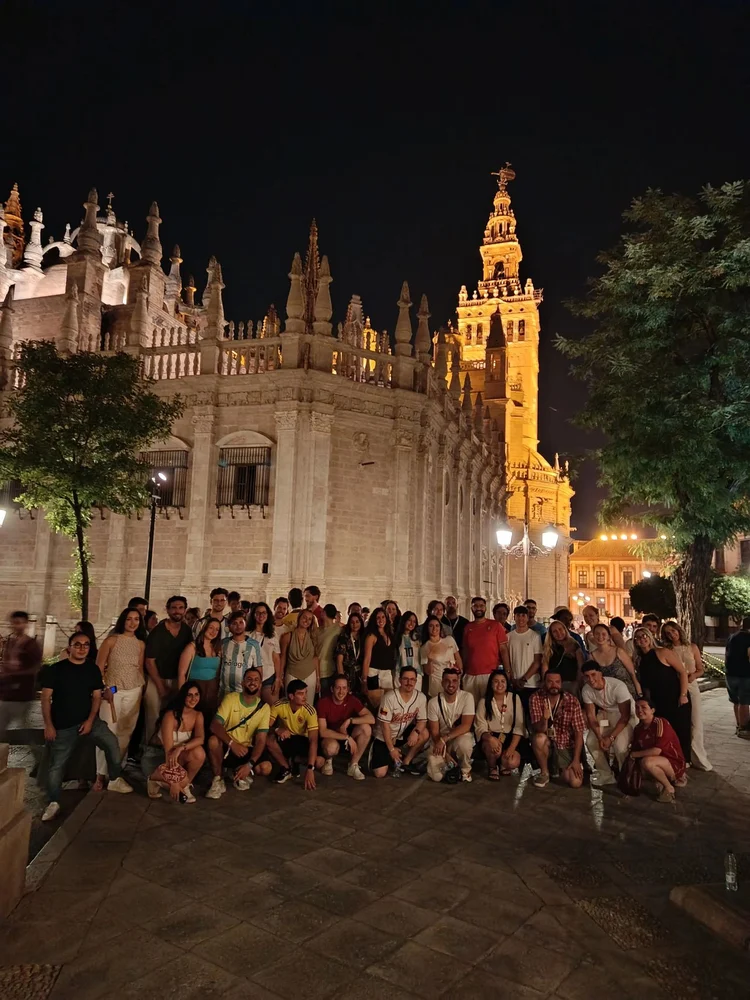
If you are in Seville during Hanukkah, walking those streets at dusk, as the first lights come on, is a good way to get closer to that history. Here is what remains of the Jewish quarter in the Barrio de Santa Cruz.
Hanukkah 2026: key dates
- First candle: at sunset on Friday 4 December 2026.
- Eighth candle: on Friday 11 December, before sunset, because Shabbat begins.
- End of Hanukkah: at nightfall on Saturday 12 December.
- Hebrew dates: 25 Kislev to 2 Tevet 5787.
Hanukkah is a reminder that a small light, kindled night after night, is stronger than the dark. In December, Seville is a good place to remember it.
Chag Hanukkah Sameach: happy Hanukkah!