This guide is for anyone travelling through Spain in the footsteps of Jewish history and unsure which cities to pick. It compares what survives in each with data from official sources (the Junta de Andalucía, the Ministry of Culture, UNESCO, Renfe and Adif), consulted on 16 November 2026. We do not include opening hours or ticket prices, because they change: check them on each monument's website before you go.
Seville, Córdoba or Toledo: which Jewish quarter should you visit?
It depends on what you are looking for. If you want to step inside a medieval synagogue, go to Toledo or Córdoba: in Seville all three synagogues became churches and only Santa María la Blanca keeps remains. If you want to understand how Sepharad ended, Seville is the city of 1391, of the Inquisition and of the expulsion. These are the details for each city, with the same fields:
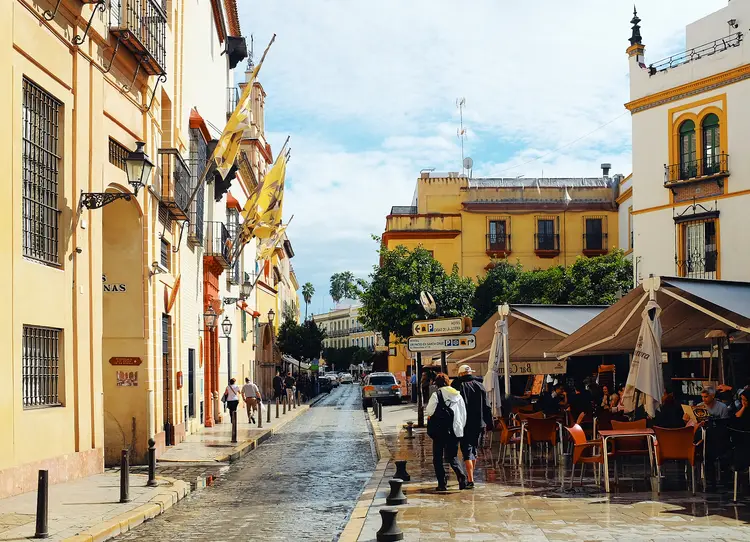
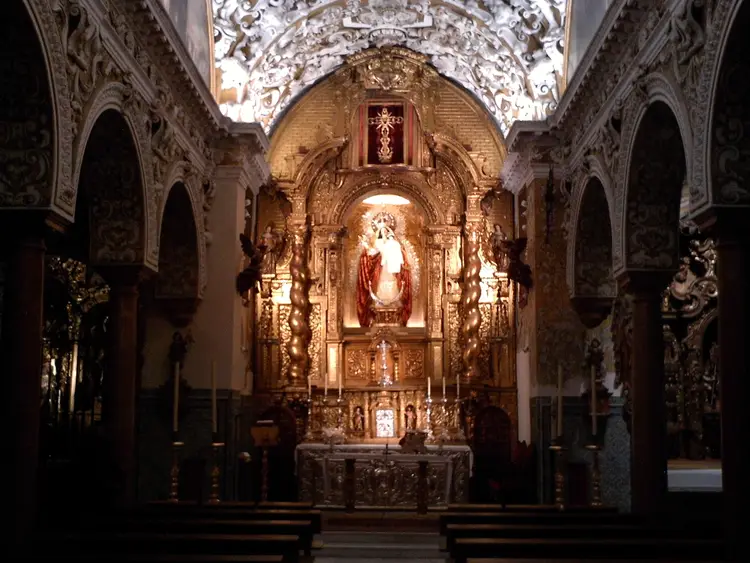
- Seville. What remains: few stones still standing, all documented: a stretch of wall on Calle Fabiola, three churches that were synagogues (only Santa María la Blanca keeps remains), a ritual bath below ground and the necropolis beneath the Murillo Gardens. Not to miss: the Santa Cruz and San Bartolomé quarters, and the Castle of San Jorge in Triana, seat and prison of the Inquisition from 1481 to 1785. Getting there from Seville: it is the starting point; the old Jewish quarter is in the centre, next to the Alcázar. Recommended time: one full day.
- Córdoba. What remains: the synagogue on Calle Judíos, dated 1314–1315 by its foundation inscription; it is Mudéjar, a national monument since 1885 and run today by the Junta de Andalucía. Not to miss: the synagogue and the streets of the Jewish quarter, with the statue of Maimonides, inside the historic centre that UNESCO lists as a World Heritage site. Getting there from Seville: about 40 minutes by high-speed train, with no change. Recommended time: one day, there and back from Seville.
- Toledo. What remains: two medieval synagogues still standing, both named by UNESCO: El Tránsito, built in the 14th century on the orders of Samuel ha-Levi, treasurer of King Pedro I of Castile, and Santa María la Blanca, with its horseshoe arches. Not to miss: the Sephardic Museum, a state museum housed in the El Tránsito synagogue. Getting there from Seville: there is no direct train; high-speed train to Madrid (from 2 h 30 min) and Avant from Madrid Puerta de Atocha to Toledo (about 30 minutes). Recommended time: one full day, ideally with a night in Toledo or Madrid.
What is there to see in Córdoba's Jewish quarter?
Above all, the synagogue on Calle Judíos. According to the Junta de Andalucía, which runs it, its foundation inscription, found in 1884, dates it to 1314–1315, and it is the only example of Hebrew religious architecture that survives in Córdoba. It is a Mudéjar building influenced by the Nasrid art of Granada; it was rediscovered in 1876 during building work and declared a national monument in 1885. Turespaña, Spain's tourism promotion body, describes it as the only synagogue in Andalusia.
Around it, the streets of the Jewish quarter keep their irregular layout and a statue in honour of Maimonides, the great Jewish thinker. The whole area lies within the historic centre of Córdoba, which UNESCO inscribed as a World Heritage site in 1984 and extended in 1994. For travellers, Córdoba's advantage is distance: about 40 minutes from Seville by high-speed train, it works as a day trip.
What is there to see in Toledo's Jewish quarter?
In its description of the Historic City of Toledo, a World Heritage site since 1986, UNESCO names two synagogues: Santa María la Blanca and El Tránsito. El Tránsito was built in the 14th century on the orders of Samuel ha-Levi, treasurer of King Pedro I; after the expulsion it passed to the Order of Calatrava, and in 1877 it was declared a national monument. It houses the Sephardic Museum, a state museum of the Ministry of Culture created in 1964 and opened to the public in 1971.
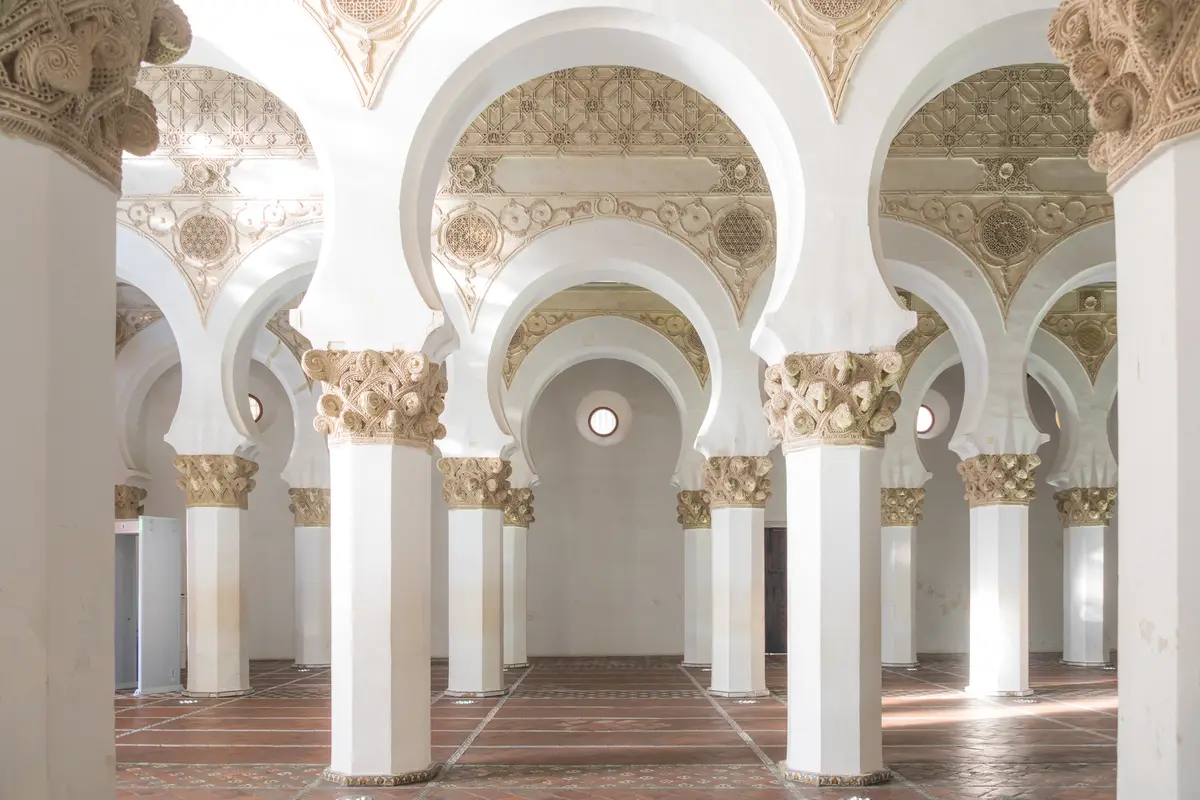
Santa María la Blanca is the other one: UNESCO counts it among the Jewish religious monuments built after the Christian conquest of 1085, and Turespaña dates it to 1180 and describes a Mudéjar building with five naves separated by horseshoe arches, turned into a church in the 15th century. Do not confuse it with Santa María la Blanca in Seville: both were synagogues and share the name today, but they are different buildings in different cities.
Why include Seville if less of it survives?
Because Seville is where the end of Sepharad makes sense. Its Jewish quarter took shape after the Christian conquest of 1248; the attacks of 1391 began here; in 1481 the Inquisition moved into the Castle of San Jorge, in Triana; and the 1492 expulsion set sail from its port. What survives is documented and can be walked in a morning: we cover it on our page about the Jewish quarter of Seville: history, map and what to see.
To read more: the Castle of San Jorge and the Inquisition in Seville and what became of the three synagogues of Seville.
How can you combine Seville, Córdoba and Toledo in 2 to 5 days?
Córdoba lies on the high-speed line between Madrid and Seville, and Toledo has its own link to Madrid. With the line running normally, these are three combinations, with the same fields:
- 2 days: Seville and Córdoba. Route: on day one, Seville's Jewish quarter in the morning and Triana in the afternoon; on day two, Córdoba as a return day trip. Trains: Seville–Córdoba, about 40 minutes each way. Who it suits: travellers already touring Andalusia who want to see a medieval synagogue without changing hotels.
- 3 days: Toledo and Seville. Route: one day in Toledo from Madrid and two in Seville, with the Jewish quarter, Triana and the Alcázar. Trains: Madrid–Toledo, about 30 minutes; Madrid–Seville, from 2 h 30 min. Who it suits: travellers arriving in Spain through Madrid who want Toledo's two synagogues and the sites of 1391 and 1492.
- 4 or 5 days: Toledo, Córdoba and Seville. Route: Toledo as a day trip from Madrid, one night in Córdoba and one or two days in Seville, north to south or the other way round. Trains: Madrid–Toledo, about 30 minutes; Madrid–Córdoba, around 1 h 40 min; Córdoba–Seville, about 40 minutes. Who it suits: travellers who arrive through Madrid and leave from Seville (or the reverse) and want to see all three Jewish quarters.
Notice as of 16 November 2026: according to Adif, traffic on the Madrid–Andalusia high-speed line remains suspended since 28 October after a collision between two trains, and service continues on the Madrid–Toledo and Málaga–Seville sections. If your trip links Madrid or Toledo with Córdoba and Seville, check the network status on Adif and the timetables on Renfe, including the Seville–Córdoba train, before you book.
In Seville, your morning in the Jewish quarter can be guided: private Jewish Quarter tour in Seville. And if you can give Seville only one day, here is how to use it on a Jewish heritage trip: Seville in one day.
Are Seville, Córdoba and Toledo in the Red de Juderías de España?
Yes. The Red de Juderías de España – Caminos de Sefarad, the association of cities with Jewish heritage, lists 27 cities on its website, all three among them. Seville rejoined on 1 January 2026: what Seville's return to the Red de Juderías means. Granada is not on the list, although the edict of expulsion of 31 March 1492 was signed there; if you are going to see the Alhambra, it is 1 h 30 min from Córdoba by high-speed train, according to Turismo de Córdoba.
Frequently asked questions
Which is closer to Seville, Córdoba or Toledo?
Córdoba, by far: it is about 40 minutes from Seville by high-speed train, with no change, according to Turismo de Córdoba. There is no direct train from Seville to Toledo: you take the high-speed train to Madrid (from 2 h 30 min) and the Avant from there to Toledo (about 30 minutes). As of 16 November 2026, Adif reports the Madrid–Andalusia high-speed line as suspended, so check the link with Madrid before you book.
Can you visit Córdoba as a day trip from Seville?
Yes. With about 40 minutes by high-speed train each way, one day is enough for the synagogue on Calle Judíos, the streets of the Jewish quarter and the statue of Maimonides, inside the historic centre that is a World Heritage site. The synagogue is run by the Junta de Andalucía: check its opening hours on the official website before you go.
Where can you go inside a medieval synagogue: Córdoba or Toledo?
In both. Córdoba keeps the synagogue on Calle Judíos, from 1314–1315, run by the Junta de Andalucía. Toledo keeps two: El Tránsito, home of the Sephardic Museum, a state museum, and Santa María la Blanca, with its horseshoe arches. In Seville, by contrast, all three medieval synagogues became churches and only Santa María la Blanca keeps remains.
How many days do you need for Seville, Córdoba and Toledo?
Between 4 and 5 days to see all three Jewish quarters without rushing: one day for Toledo from Madrid, a night in Córdoba and one or two days in Seville. With 2 days you can combine Seville and Córdoba, and with 3, Toledo and Seville. With the line running normally, trains take about 30 minutes from Madrid to Toledo, around 1 h 40 min from Madrid to Córdoba and about 40 minutes from Córdoba to Seville.
Sources
- Junta de Andalucía — “Enclave Monumental Sinagoga de Córdoba”: the 1314–1315 foundation inscription, the rediscovery of 1876 and the national monument declaration of 1885 (consulted on 16 November 2026)
- Turespaña (spain.info) — “The Jewish Quarter (Córdoba)”: the synagogue, the only one in Andalusia, and the statue of Maimonides
- UNESCO — “Historic Centre of Cordoba”: inscribed in 1984, with its boundaries extended in 1994
- UNESCO — “Historic City of Toledo”: inscribed in 1986; it names the synagogues of Santa María la Blanca and El Tránsito
- Ministry of Culture of Spain — Museo Sefardí, “Un museo en un monumento” (a museum in a monument): Samuel ha-Levi, the Order of Calatrava, national monument in 1877, museum created in 1964 and opened in 1971
- Turespaña (spain.info) — “Sinagoga de Santa María La Blanca” (Toledo): 1180, five naves with horseshoe arches, a church since the 15th century
- Turismo de Córdoba — “How to arrive to Cordoba”: Seville–Córdoba 40 minutes, Madrid–Córdoba 1 h 40 min and Granada–Córdoba 1 h 30 min by high-speed train
- Turespaña (spain.info) — “Explore Spain on its high-speed trains”: Madrid–Seville from 2 h 30 min and Madrid–Toledo in 30 minutes
- Renfe — “Qué ver en Toledo” (what to see in Toledo): Madrid to Toledo by Avant train in 30 minutes
- Renfe — “Billetes de tren ruta Madrid Toledo” (Madrid–Toledo train tickets): departures from Madrid Puerta de Atocha – Almudena Grandes
- Adif — “Estado de la red” (network status): traffic suspended on the Madrid–Andalusia high-speed line since 28 October 2026 (consulted on 16 November 2026)
- Red de Juderías de España – Caminos de Sefarad — “Ciudades” (cities): the network's 27 cities, among them Seville, Córdoba and Toledo (consulted on 16 November 2026)
- Delgado Ramírez, A. A. (2024). Casa Sefardí de Sevilla. Master's dissertation (Trabajo Fin de Máster), Universidad Pablo de Olavide, 2023/2024.
- Cover photo: JP Puerta, “Sinagoga de Córdoba (España)”, Córdoba, 2007. CC BY 2.0, via Wikimedia Commons.
- Photo of Santa María la Blanca in Toledo: Fernando, “Santa María la Blanca - Arcos”, 2025. CC BY-SA 4.0, via Wikimedia Commons.