This Friday, 11 September 2026, at sunset, Rosh Hashanah begins: the Jewish New Year. The celebration lasts until nightfall on Sunday 13 September and opens the year 5787 of the Hebrew calendar.
It is one of the most important dates in the Jewish calendar. Its Hebrew name literally means “head of the year”, and it marks a time of celebration, but also of reflection, personal stock-taking and renewal.
What is Rosh Hashanah?
Rosh Hashanah is celebrated on the first two days of the Hebrew month of Tishrei. According to Jewish tradition, it recalls the creation of the world and, above all, of humankind. It also opens the Ten Days of Repentance, a period of introspection that culminates in Yom Kippur, the Day of Atonement (see what Rosh Hashanah is and how it is celebrated, in National Geographic Historia).
During these days, tradition invites each person to take stock of the year that is ending, acknowledge their mistakes and seek reconciliation, both with God and with anyone they may have hurt. That is why Rosh Hashanah is not only the start of a new year: it is also a moment of personal and collective renewal.
The sound of the shofar
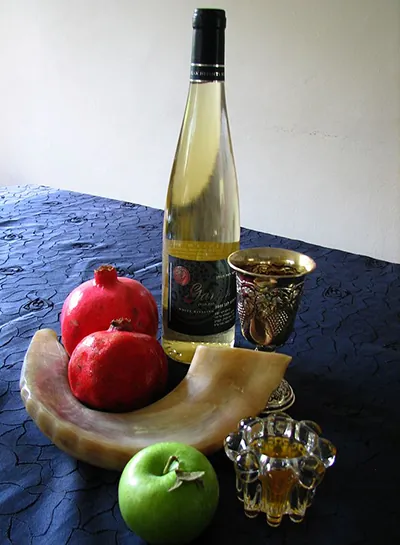
One of the most recognisable symbols of Rosh Hashanah is the shofar, a traditional instrument usually made from a ram's horn. Its sound carries deep religious meaning: it is a call to introspection, to awaken the conscience and to examine one's own conduct, and it marks the start of the road towards Yom Kippur.
More than a musical tradition, the blowing of the shofar is an invitation to pause, look back and consider how to face the year ahead.
Apple and honey, pomegranate and challah: the flavours of the new year
Rosh Hashanah is also full of culinary symbols. The best known is eating apple dipped in honey, a gesture that expresses the wish for a sweet year ahead. Pomegranate, found on many tables, stands for abundance and good wishes for the new cycle. Barcelona's Museu Etnològic i de Cultures del Món describes these and other customs of the festival, which vary with each community's origins.
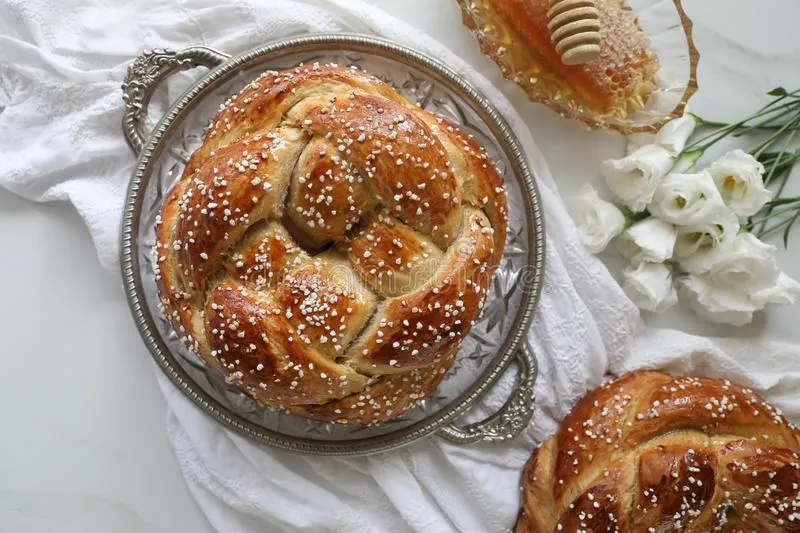
Even the bread changes shape. Challah, the braided Sabbath loaf, is baked round for Rosh Hashanah to evoke the cycle of the year beginning again, and in many homes it is dipped in honey instead of salt.
Families gather around the table, share these symbolic foods and wish one another a good year. The traditional greeting is Shanah Tovah (שנה טובה), which can be translated as “good year” or “have a good year”.
Rosh Hashanah and the Sephardic tradition
For Sephardic communities, Rosh Hashanah is part of a religious and cultural heritage handed down through generations, first in the Iberian Peninsula and, after the expulsion of 1492, in the communities the Sephardim founded around the Mediterranean, in North Africa and in the Middle East.
Each community celebrates the festival with its own culinary, linguistic and family customs. That diversity is an important part of the Sephardic legacy and of the Jewish history bound up with Spain.
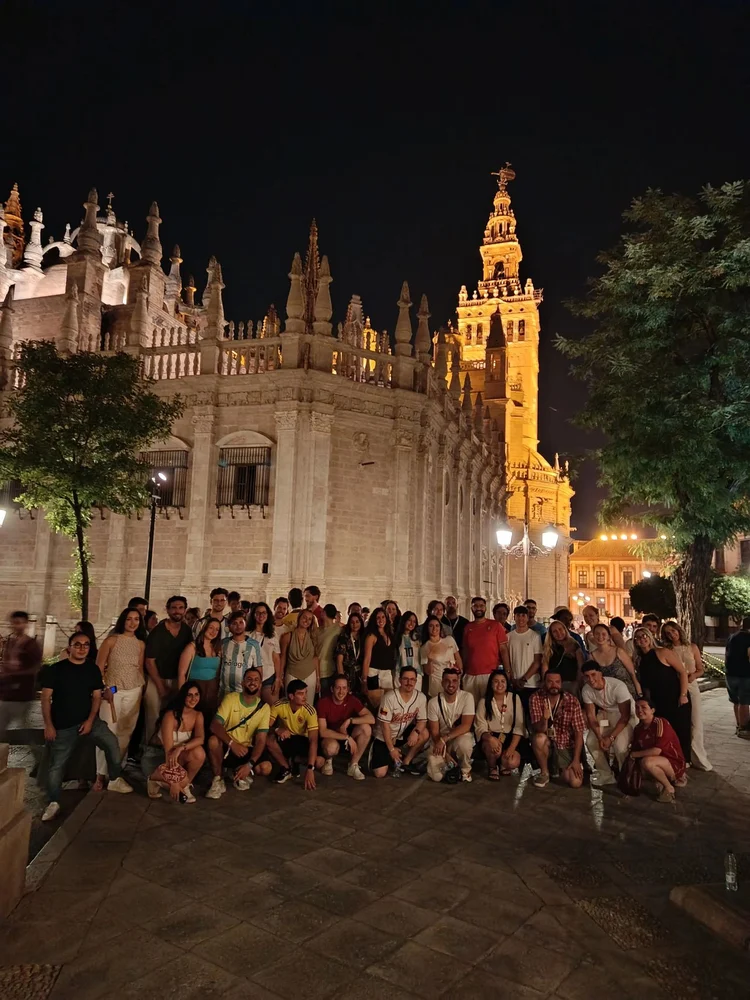
In Seville, that history has a precise setting. From the Christian conquest of 1248 and for generations, the city's Jewish quarter – around today's Barrio de Santa Cruz – had its synagogues, its streets and its own calendar, and every autumn Rosh Hashanah marked the start of the year there. We tell the story of those synagogues, later turned into churches, in our article on the three synagogues of Seville.
The start of the Yamim Noraim
Rosh Hashanah also opens an especially solemn period of the Jewish calendar, the Yamim Noraim, usually translated as the “Days of Awe”. It is devoted to introspection, repentance and repairing relationships with others, and culminates ten days later in Yom Kippur, regarded as one of the holiest days in Judaism.
Shortly afterwards comes Sukkot, the Feast of Tabernacles, completing a particularly intense stretch of the Jewish religious calendar.
Rosh Hashanah in Spain today
Rosh Hashanah remains a living celebration for Spain's Jewish communities and, beyond its religious dimension, has become an occasion to share Jewish and Sephardic culture. The Centro Sefarad-Israel places the 2026 festival between 11 and 13 September and highlights its importance as the start of the year 5787, and Spain's Observatory on Racism and Xenophobia (OBERAXE) has also shared its meaning.
The Federation of Jewish Communities of Spain has stressed in recent years that this time of celebration and reflection is also lived with concern over rising antisemitism. In its Rosh Hashanah message of 2025, it called for a return to coexistence, respect and safety for all.
Knowing Jewish history and traditions is not only about looking to the past: it helps us understand the diversity of today's society and why this heritage deserves protecting. Cities such as Madrid now showcase their Jewish past, and this year Seville has rejoined the Network of Jewish Quarters of Spain.
Rosh Hashanah 2026: key dates
- Rosh Hashanah: from sunset on Friday 11 September to nightfall on Sunday 13 September 2026.
- Hebrew year beginning: 5787.
- Yom Kippur: from sunset on Sunday 20 to nightfall on Monday 21 September.
- Sukkot: begins at sunset on Friday 25 September.
Rosh Hashanah reminds us that a new year can be more than a change of date on the calendar: a chance to pause, reflect on what we have lived, mend what needs mending and face the future with hope.
If you'd like to follow the project, on Casa Sefardí's Instagram you'll also find our post devoted to Rosh Hashanah: the shofar, the sweetness of the pomegranate and the Sabbath bread, and an invitation to imagine discovering all of this in a unique space in Seville: the future Casa Sefardí de Sevilla.
Shanah Tovah Umetukah: may it be a good and sweet year.
Sources
- Federation of Jewish Communities of Spain: the Jewish community welcomes the new year with concern about antisemitism
- OBERAXE (Spanish Ministry of Inclusion): the Jewish community celebrates Rosh Hashanah, the Jewish New Year
- Centro Sefarad-Israel: Rosh Hashanah
- Museu Etnològic i de Cultures del Món (Barcelona City Council): Rosh Hashanah, the Jewish year's end
- esMadrid: Jewish Madrid
- National Geographic Historia: what Rosh Hashanah is and how it is celebrated
- Casa Sefardí de Sevilla on Instagram: Rosh Hashanah, the Jewish New Year