This guide is for anyone travelling to Seville who keeps kashrut or Shabbat, or who simply wants to know what is there. It gathers only what the organisations themselves publish on their websites, consulted on 16 November 2026, and points you to them for everything that changes: times, services and contacts. We do not publish addresses or prayer times: the community will confirm them to you directly.
Kosher food, synagogue, Chabad and Shabbat in Seville: the essentials
These are the services that travellers who keep the tradition usually look for in Seville, with the same details for each:
- Kosher food. What there is in Seville: no establishment on the FCJE list as of mid-November 2026; the nearest ones on the list are in the province of Málaga. Where to check: the FCJE's list of kosher establishments in Spain. Note: the practical alternative is packaged products with a recognised kosher seal.
- Synagogue. What there is in Seville: the private synagogue of the Comunidad Israelita de Sevilla, the city's community that is a member of the FCJE. Where to check: the FCJE's directory of communities. Note: write in advance; for security reasons, visits are arranged beforehand.
- Chabad House. What there is in Seville: none in Chabad.org's directory as of mid-November 2026. Where to check: Chabad.org's list of Chabad centres in Spain. Note: in Andalusia, that list includes only Marbella.
- Shabbat times. What there is in Seville: Shabbat begins at sunset on Friday and the time changes every week. Where to check: Hebcal's calendar for Seville. Note: on Friday 20 November 2026, candles are lit at 17:52.
- Eruv. What there is in Seville: we have not found any published eruv. Where to check: the local community. Note: if you carry on Shabbat only within an eruv, ask before you travel.
- Passover 2027. What there is in Seville: the same as the rest of the year, no kosher establishment on the FCJE list. Where to check: according to Hebcal, Passover begins at sundown on Wednesday 21 April 2027 and, outside Israel, ends at nightfall on Thursday 29 April. Note: food for Passover needs even earlier planning.
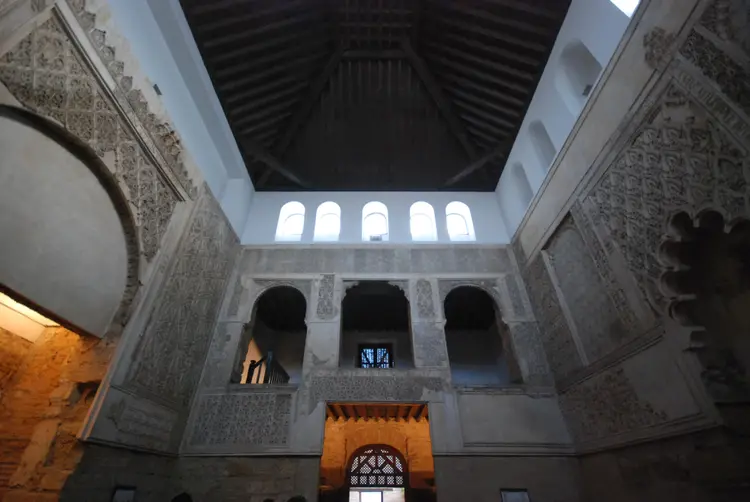
- Medieval synagogues. What there is in Seville: all three became churches, and only Santa María la Blanca keeps remains. Where to check: our article on the three synagogues of Seville. Note: today they are heritage sites and Catholic churches, not places of Jewish worship.
Where can you eat kosher in Seville?
As far as the official list shows, nowhere certified in the city itself. The FCJE, whose kashrut department manages kosher certification in Spain, publishes a list of kosher establishments in Spain, and as of mid-November 2026 it includes none in Seville. In Andalusia, those listed are in the province of Málaga: in Málaga city, Torremolinos and Marbella. Outside Andalusia, the list covers establishments in Madrid, Barcelona and Alicante.
The practical alternative is packaged products with a recognised seal. According to the FCJE, its certification department works with the major international seals, such as OU and KLBD, and the rabbinate of the Jewish Community of Madrid certifies under its own seal, Kosher Madrid. Whether an uncertified vegetarian or fish dish is acceptable depends on your own practice and your rabbi, not on a guide. For Passover, all of this has to be planned even earlier.
To read more: the quarter's bars and restaurants, none of them kosher-certified, and which Andalusian dishes really have Sephardic roots, are in where to eat in Seville's Jewish quarter and the dishes with Sephardic roots.
How do you contact the Jewish community in Seville?
Through the FCJE. Its directory of communities lists the Comunidad Israelita de Sevilla as a member, the only one in the city within the federation: a small, Orthodox community with a private synagogue. It is not a place for tourist visits. To attend a service or spend Shabbat, write to it in advance through the contact the FCJE publishes. As at many synagogues in Europe, visits are arranged beforehand for security reasons.
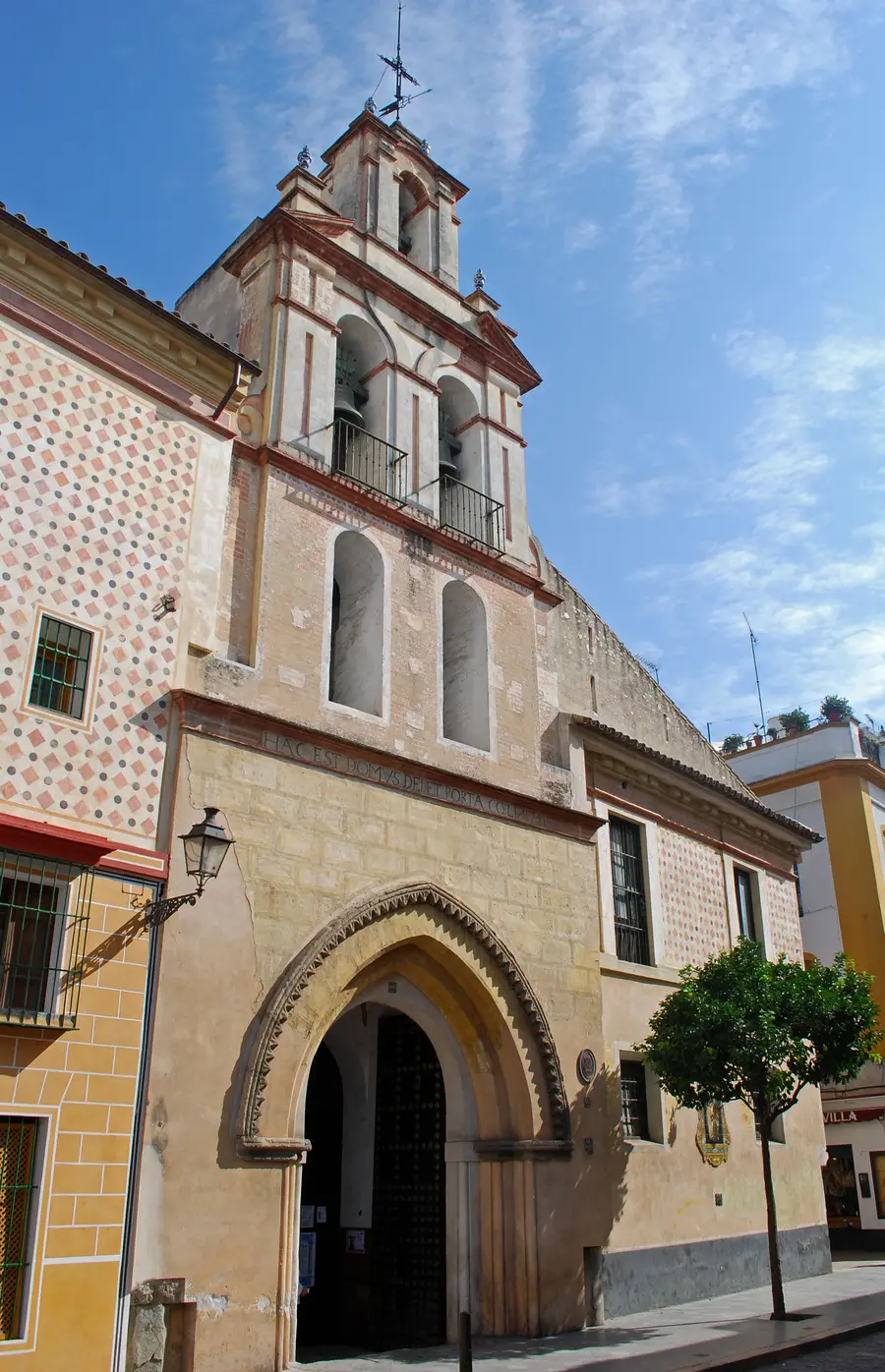
The synagogues you will see in the Jewish quarter are another matter: all three medieval synagogues ended up as churches, and only Santa María la Blanca keeps remains, as we tell in the three synagogues of Seville, from mosques to churches. Today's Jewish community is the subject of the room The present day in the virtual museum.
Is there a Chabad House in Seville?
Not in Chabad.org's directory. As of mid-November 2026, its list of Chabad centres in Spain covers seven cities: Barcelona, Costa Adeje, Ibiza Town, Madrid, Marbella, Sant Cugat del Vallès and Valencia. Seville is not among them, and in Andalusia only Marbella, on the Costa del Sol, appears. If you are looking for a Shabbat dinner in Seville, ask the local community; if your trip takes in Marbella, look up the centre there in the same directory.
What time does Shabbat start in Seville?
At sunset on Friday, and the time changes every week. Hebcal's calendar for Seville gives candle lighting and havdalah for the current week: for the weekend of 20 and 21 November 2026, candles at 17:52 on Friday and havdalah at 18:51 on Saturday. In summer Shabbat starts much later, so check the times for your dates before booking anything for a Friday afternoon.
Which days can you take the tour if you keep Shabbat?
Monday to Friday. Our private Jewish Quarter tour in Seville runs Monday to Saturday, never on Sunday, departing every hour from 10:00 to 17:00 from the Mercury fountain in the Plaza de San Francisco: two hours just for your group, in English or Spanish, for €176.40 in total for up to 7 people. If you keep Shabbat, Saturday is out, and on Friday a morning departure is wiser: on 20 November 2026, for example, Shabbat begins in Seville at 17:52.
The route that includes Santa María la Blanca, the former synagogue, leaves at 11:30 and 17:30 from the Plaza Virgen de los Reyes; if you choose a Friday, the 11:30 departure is the one that fits. Booking is online and in advance.
Is Spain safe for Jewish travellers?
The most reliable guide is official travel advice, and as of mid-November 2026 that of the United States, the United Kingdom and Israel agrees on the essentials: more attention than usual, above all because of the risk of terrorism, and following the instructions of local authorities. None advises against travel to Seville. Here they are, with the same details for each:
- United States (Department of State). Level: 2 of 4, “exercise increased caution”, due to terrorism and unrest; only Ceuta is at level 3. What it says: terrorist groups continue plotting possible attacks in Spain, and the possible targets it lists include tourist locations and places of worship. Date: advisory issued on 1 August 2026.
- United Kingdom (FCDO, the Foreign Office). Level: it does not use a numbered scale. What it says: terrorists are likely to try to carry out attacks in Spain, and attacks could be indiscriminate, including in places visited by foreign nationals; it asks you to stay aware and follow local authorities. Date: page updated on 10 November 2026.
- Israel (National Security Council). Level: 2 of 4, “occasional threat”. What it says: it recommends taking increased precautions. Date: consulted on 16 November 2026.
In practice: if your country has an alert service for travellers, such as the US STEP programme, sign up before you leave, and for the synagogue follow the procedure the community gives you. The official pages, linked in the sources, are updated; look at them again just before you travel.
Frequently asked questions
Is there a kosher restaurant in Seville?
As of mid-November 2026, the list of kosher establishments of the Federation of Jewish Communities of Spain (FCJE) includes none in Seville. The nearest establishments on the list are in the province of Málaga, in Málaga city, Torremolinos and Marbella. In Seville, the practical alternative is packaged products with a recognised kosher seal.
Where is the nearest Chabad House to Seville?
Chabad.org's directory lists no Chabad House in Seville as of mid-November 2026. In Andalusia, the only centre on its list is in Marbella, on the Costa del Sol; the other centres in Spain are in Barcelona, Costa Adeje, Ibiza Town, Madrid, Sant Cugat del Vallès and Valencia. For Shabbat in Seville, contact the local community in advance through the FCJE.
Is there an eruv in Seville?
We have not found any published eruv in Seville as of mid-November 2026, either on the websites of Jewish organisations or in other sources. If you carry on Shabbat only within an eruv, ask the local community, the Comunidad Israelita de Sevilla, before you travel.
When is Passover 2027?
According to Hebcal, Passover 2027 begins at sundown on Wednesday 21 April 2027, with the first Seder that night, and outside Israel it ends at nightfall on Thursday 29 April. If you travel to Seville on those dates, bear in mind that no establishment in the city appears on the FCJE's list of kosher establishments.
Sources
- Federation of Jewish Communities of Spain (FCJE) — “Comunidades”: directory of member communities, including the Comunidad Israelita de Sevilla (consulted on 16 November 2026)
- FCJE — “Establecimientos Kosher en España” (kosher establishments in Spain): the list by city, with none in Seville (consulted on 16 November 2026)
- FCJE — “Certificación Kosher” (kosher certification): the FCJE's kosher certification department and its work with the OU and KLBD seals
- Kosher Madrid — the kosher certification service of the Jewish Community of Madrid
- Chabad.org — “Chabad Centers in Spain”: directory of Chabad centres in Spain (consulted on 16 November 2026)
- Hebcal — “Shabbat Times for Sevilla, Spain”: this week's candle lighting and havdalah in Seville
- Hebcal — “Pesach 2027”: the dates of Passover 2027 (15–22 Nisan 5787)
- U.S. Department of State — “Spain Travel Advisory”: Level 2, issued on 1 August 2026
- GOV.UK (FCDO) — “Spain travel advice”, “Safety and security” section (advice updated on 10 November 2026)
- Israel's National Security Council — “אזהרות מסע” (travel warnings): Spain, Level 2 (consulted on 16 November 2026)
- Delgado Ramírez, A. A. (2024). Casa Sefardí de Sevilla. Master's dissertation (Trabajo Fin de Máster), Universidad Pablo de Olavide, 2023/2024.
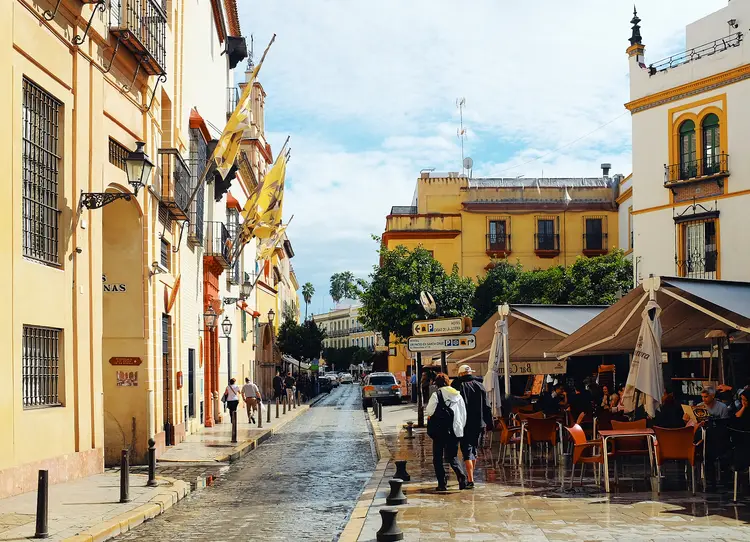
- Cover photo: CarlosVdeHabsburgo, “Calle Judería 01”, Seville, 2024. CC BY-SA 4.0, via Wikimedia Commons.
- Photo of Santa María la Blanca: Anual, “Iglesia de Santa María la Blanca, Sevilla”, 2008. CC BY 3.0, via Wikimedia Commons.